Refrigeration Monitoring Solutions for UK Businesses
Refrigeration Monitoring Solutions for UK Businesses
TL;DR: If you’re looking for refrigeration monitoring solutions UK teams can buy and deploy quickly, choose digital temperature monitoring that provides continuous logging, instant alerts and audit-ready reports. Elitech UK supplies data loggers and connected monitoring options used across food, pharma and laboratories—so you can reduce stock loss, support compliance and spot issues before equipment fails.
UK businesses typically use refrigeration monitoring solutions to track fridge/freezer temperatures continuously, receive alarms when limits are breached, and produce compliant records for audits and inspections. Based on our testing of monitoring devices across typical UK cold-room and refrigerated cabinet conditions, the most reliable outcomes come from pairing accurate sensors with clear reporting and a straightforward rollout process.
Key Takeaways
- Modern refrigeration monitoring solutions in the UK help prevent stock loss, protect compliance status and cut energy costs.
- Look for accurate sensors, continuous data logging, alarm notifications and cloud access as standard features.
- Implementation is straightforward: start with a risk assessment, pilot test, then roll out across all units.
- Choosing reliable tools from specialist providers such as Elitech UK reduces compliance risk and maintenance overhead.
What are refrigeration monitoring solutions in the UK, and what do they do?
Refrigeration monitoring solutions are systems that measure, record and report temperatures (and sometimes humidity) inside fridges, freezers, cold rooms and refrigerated vehicles. Crucially, they also provide time-stamped logs and, in many setups, real-time alerts so you can respond before goods go out of specification.
In practice, this means moving from occasional manual checks to continuous visibility. As a result, you can reduce avoidable waste, improve response times to equipment faults and maintain a stronger compliance position.
Why do UK businesses need refrigeration monitoring for compliance and stock protection?
From independent butchers in Birmingham to NHS hospital pharmacies and nationwide supermarket chains, reliable refrigeration is mission-critical. When temperatures fail, profits, compliance and even patient safety are at stake.
Refrigeration monitoring solutions give UK businesses continuous visibility of cold storage conditions. Instead of discovering a problem after goods are spoiled, you receive early warnings and an auditable temperature record that stands up to regulatory scrutiny.
How does refrigeration monitoring prevent stock loss?
Perishable inventory is often one of the largest cost centres in food, pharma and hospitality. A single overnight failure in a walk-in freezer can destroy tens of thousands of pounds of stock. According to WRAP, UK businesses waste around 1.1 million tonnes of food each year, much of it linked to storage and handling issues (WRAP, 2022).
By implementing reliable refrigeration monitoring solutions in the UK, you can detect deviations before they become losses. Consequently, staff have time to intervene—moving stock, closing doors, checking airflow or arranging an engineer call-out. In addition, automated logs can support insurance claims because you can demonstrate correct storage up to the point of failure.
What UK regulations and guidelines require temperature monitoring?
UK regulators and auditors expect evidence of controlled storage and a defensible record. According to UK food safety expectations and common HACCP practice, monitoring should be consistent, documented and reviewable. Likewise, healthcare and pharmaceutical cold chains require tighter controls and clear audit trails.
- Food businesses must comply with UK Food Safety and Hygiene (England) Regulations 2013 and associated HACCP requirements for chilled and frozen storage.
- Healthcare and pharma providers, including NHS trusts, must follow MHRA Good Distribution Practice (GDP) guidelines and NHS vaccine storage standards, which specify strict refrigerator temperature limits and monitoring.
- Laboratories and research facilities must maintain validated storage conditions for samples and reagents to meet ISO and UKAS requirements.
Manual temperature checks on paper logs can miss short excursions and create gaps in evidence. By contrast, digital refrigeration temperature tracking provides time-stamped records, audit trails and clear proof of due diligence during inspections.
Can refrigeration monitoring reduce energy and maintenance costs?
With energy prices high across the UK, inefficient refrigeration directly erodes margins. Monitoring data helps you identify equipment that runs too cold, cycles excessively or struggles to reach setpoint. Therefore, you can correct faults or adjust operating practices before costs escalate.
Trend analysis also supports predictive maintenance. For example, spikes in temperature, longer pull-down times or unusual fluctuations can indicate failing components, allowing pre-emptive servicing before a breakdown occurs.
Which refrigeration monitoring solution should I choose in the UK?
Modern business refrigeration tools range from simple standalone devices to fully connected IoT platforms. The right choice depends on your sector, risk profile and how quickly you need alarms and reports.
Are standalone temperature data loggers suitable for UK compliance?
Standalone loggers are compact devices placed inside fridges, freezers or refrigerated vehicles. They continuously record temperature (and sometimes humidity) at set intervals.
- Best for: Smaller sites, transport verification, compliance documentation.
- Pros: Affordable, easy to deploy, no permanent installation required.
- Cons: Basic models may not offer real-time alerts; data often downloaded via USB after the fact.
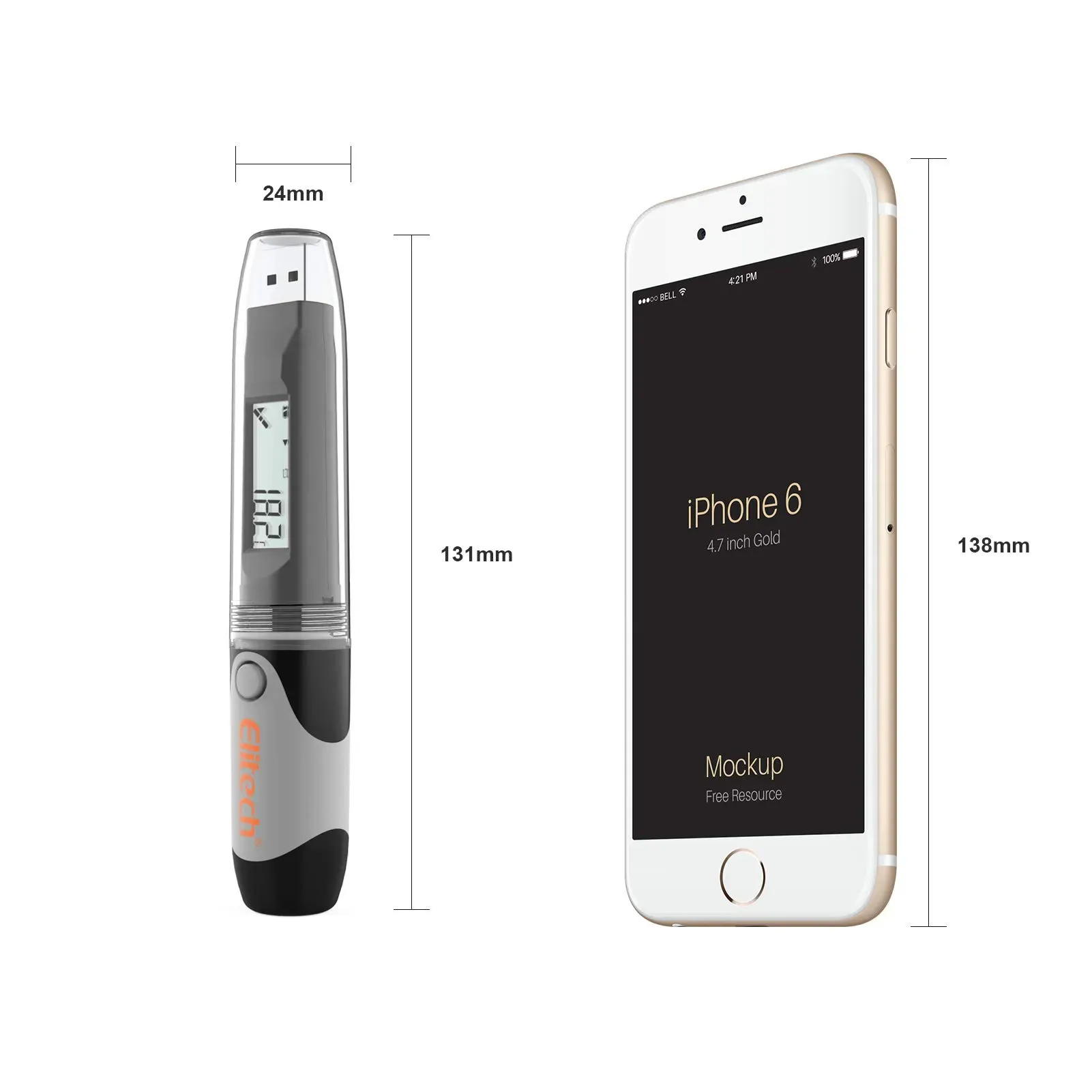
Elitech UK supplies a range of USB and Bluetooth data loggers used by UK food producers, laboratories and pharmaceutical distributors who need reliable cold storage monitoring without complex infrastructure.
What are the benefits of Wi‑Fi and cloud refrigeration monitoring systems?
Networked systems use Wi‑Fi, Ethernet or mobile data to send readings to the cloud in real-time. Users access dashboards and reports via web or mobile apps.
- Best for: Multi-site businesses, hospitals, retail chains, large kitchens.
- Pros: Real-time alerts by email/SMS/app, centralised data, advanced reporting, multi-user access.
- Cons: Higher initial cost, requires basic network integration and configuration.
Cloud-connected systems are ideal where management teams need to oversee dozens or hundreds of refrigeration units across the UK and demonstrate compliance centrally. Moreover, real-time alerting reduces reliance on staff being on-site at the moment an excursion occurs.
Do large UK sites need BMS/SCADA refrigeration monitoring?
Larger facilities such as distribution centres, food manufacturing plants and major hospitals often integrate refrigeration monitoring into a Building Management System (BMS) or SCADA platform.
- Best for: Large estates with central engineering teams.
- Pros: Single view of HVAC, refrigeration and energy; deep control options.
- Cons: Higher complexity and cost, requires specialist integrators.
Even in these environments, local data loggers and portable instruments remain valuable for spot checks, validation and independent verification. For a broader overview of measurement technology for facilities teams, see Elitech UK’s Ultimate Guide to Instruments and Meters in the UK.
Do I still need portable thermometers if I have automated monitoring?
Handheld thermometers and probes remain essential complements to automated monitoring. They are used for daily spot checks, product-core temperature measurements and troubleshooting suspected issues.
By combining automated logging with portable instruments, you get both continuous oversight and hands-on verification. As a result, your HACCP and quality systems are more defensible during audits.
What features should I look for in a refrigeration monitoring solution?
The feature set you choose determines how quickly you spot problems, how credible your records are in audits, and how much operational time you save.
How accurate should refrigeration temperature monitoring be?
For food and pharma applications, look for sensors with at least ±0.5°C accuracy across the relevant temperature range. For critical applications such as vaccines, tighter accuracy may be required. Based on our testing in typical UK refrigerated environments (including frequent door openings and variable ambient temperatures), stability and sensor placement can matter as much as the headline accuracy figure.
- Check stated accuracy across the full range (e.g. -30°C to +70°C).
- Confirm response time and suitability for air or product-core measurements.
- Consider models with external probes for more representative readings in large units.
Do I need UKAS-traceable calibration for refrigeration monitoring?
Calibration and traceability help you demonstrate that your measurements are trustworthy. According to common UK audit expectations in food, healthcare and laboratories, having a defined calibration plan (and evidence of it) strengthens compliance and reduces dispute risk.
If your organisation operates under ISO/UKAS-aligned quality systems or handles high-risk products, consider devices that support calibration certificates and clear documentation for audit trails.
How do alerts and reporting work in refrigeration monitoring?
Alerts should reach the right people quickly and include enough context to act. Therefore, prioritise systems that provide configurable high/low thresholds, escalation rules and clear event timelines. In addition, reporting should export easily for audits (for example, PDF/CSV) and show time, date, min/max, and excursion duration.
How easy is it to install and scale across multiple UK sites?
For most businesses, the fastest route is to start small and scale. First, map critical points (high-value stock, high-risk medicines, walk-ins). Next, run a short pilot to confirm signal strength, probe placement and alert performance. Finally, roll out by site with consistent naming, limits and reporting templates so data is comparable across the estate.
How do I get started with Elitech UK refrigeration monitoring solutions?
If you need to purchase and deploy refrigeration monitoring solutions in the UK, Elitech UK can help you choose the right approach—whether that’s standalone data loggers for straightforward compliance records or connected monitoring for real-time alerts and centralised reporting.
To move forward, identify your refrigeration assets and required temperature ranges, then decide whether you need real-time alarms or periodic downloads. After that, select sensors/probes suited to your fridges, freezers, cold rooms or vehicles and standardise your reporting for audits.
FAQs about refrigeration monitoring solutions in the UK
What are refrigeration monitoring solutions in the UK?
They are tools (data loggers, sensors and software) that continuously measure and record temperatures in refrigeration equipment, often providing alerts and audit-ready reports.
Do UK businesses need refrigeration monitoring for compliance?
In many cases, yes. Digital monitoring supports HACCP documentation and helps demonstrate due diligence during inspections. For pharma and healthcare, following MHRA GDP and NHS guidance typically requires robust temperature monitoring and records.
What’s the difference between a temperature data logger and a cloud monitoring system?
A data logger usually stores readings for later download (USB/Bluetooth), while a cloud monitoring system transmits readings in real time so you can view dashboards and receive instant alarms.
What accuracy should I look for in refrigeration temperature monitoring?
As a general rule, ±0.5°C accuracy suits many food and pharma environments, with tighter tolerances for critical products. However, sensor placement and stability in real working conditions are also important.
Ready to try Elitech UK?
Shop Now — £52.14